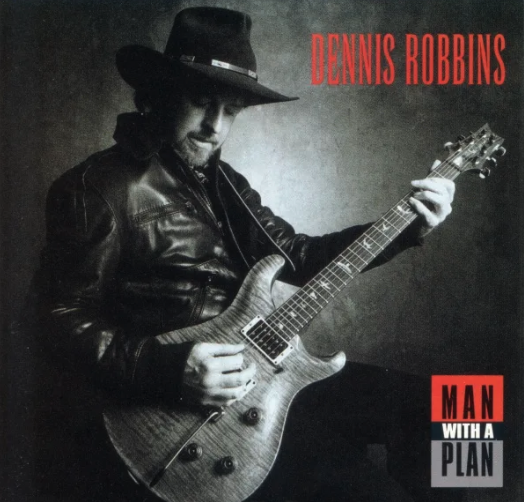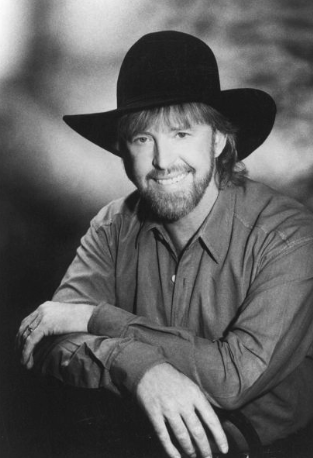
Dennis Robbins is one of those rare figures in American music whose fingerprints are all over the songs you know, even if his name isn't. Born August 23, 1949 in Hazelwood, North Carolina, he picked up a guitar as a teenager and never put it down — trading football practice for hours in the garage learning Lonnie Mack licks, the kind of apprenticeship that shapes a musician's entire voice. By fourteen he'd started a band with his brother and was playing proms and parties across western North Carolina.
After graduating high school, Dennis enlisted in the United States Marine Corps and shipped to Vietnam, where he served from 1968 to 1969. In-country, he played guitar in a Marine rock band called The Green Machine — an original-lineup outfit of active-duty Marines who performed for troops throughout the war zone, including stops at the DMZ and China Beach. One of their shows was cut short by incoming rocket fire. The band was good enough that when their drummer sent a 45 they'd pressed stateside to Ed Sullivan, Sullivan booked them. In January 1969, The Green Machine performed "Stand Up and Be Counted" live on The Ed Sullivan Show — but Dennis wasn't on that stage. He couldn't get leave to fly home for it. The rest of the band made the trip; he stayed in Vietnam and kept playing. Later that year, he came home on the USS Iwo Jima as part of the first American troop withdrawal from Vietnam.
That tour left its mark. The slide-guitar style he'd eventually become known for — equal parts blues-rock fury and country honky-tonk ease — was already taking shape, forged in loud rooms, hard miles, and the kind of music that had to cut through whatever the moment demanded.
Back stateside, Dennis landed in Detroit and joined The Rockets, the blues-rock band built around former Mitch Ryder sidemen Jim McCarty and Johnny "Bee" Badanjek. For six years he held down slide and rhythm guitar in the lineup that broke nationally with "Oh Well," opening tours for ZZ Top, Kiss, and Bob Seger. He co-wrote "Desire," which cracked the Billboard Hot 100 at number 70. It was a real rock 'n' roll education — sold-out arenas, hard travel, and the kind of stage-time that teaches a guitar player how to make a single note carry a whole room.
Family pulled him off the road. After the birth of his son, Dennis came home to North Carolina, then set out for Nashville with songs in his hands and a clearer musical identity in mind. He signed to MCA Records in 1986 and released his debut, The First of Me, a record Billboard called a "uniformly strong launch project." That same year he co-founded the songwriter supergroup Billy Hill with Bob DiPiero and John Scott Sherrill — a trio whose blend of honky-tonk, blues, and rock helped shape the sound of early-'90s country.
What followed was one of the great runs in country songwriting. Dennis co-wrote "Two of a Kind, Workin' on a Full House," which he cut himself in 1987; three years later Garth Brooks recorded it for No Fences, and it went to number one in 1991. He co-wrote "The Church on Cumberland Road" — originally the B-side of his own 1987 single — which became Shenandoah's first number-one country hit in 1989. That same year, "(Do You Love Me) Just Say Yes" became a number one for Highway 101. He co-wrote "Finally Friday," which George Jones cut for his 1992 album Walls Can Fall. Over the years, his songs have been recorded by Marty Stuart, Tracy Lawrence, Kenny Chesney, Confederate Railroad, Johnny Rodriguez, and Earl Thomas Conley.
His own solo career on Giant Records produced Man with a Plan (1992), home to his highest-charting solo single "Home Sweet Home," and Born Ready (1994), which featured "Mona Lisa on Cruise Control." Robert Christgau called Man with a Plan "country-rock honky-tonk by a songwriter with an eye." Critics loved him. Radio liked him fine. But the songs he'd written for other people had already traveled further than any single one of his own, and that's the shape his legacy took: a songwriter's songwriter, a guitar player's guitar player, a Marine who came home from Vietnam and went on to write songs that country radio couldn't live without.
These days, music still runs in the family — his son Corey Robbins carries the tradition forward. The Casita is lucky to host them both.